
How Automated Onboarding Improves Employee Satisfaction

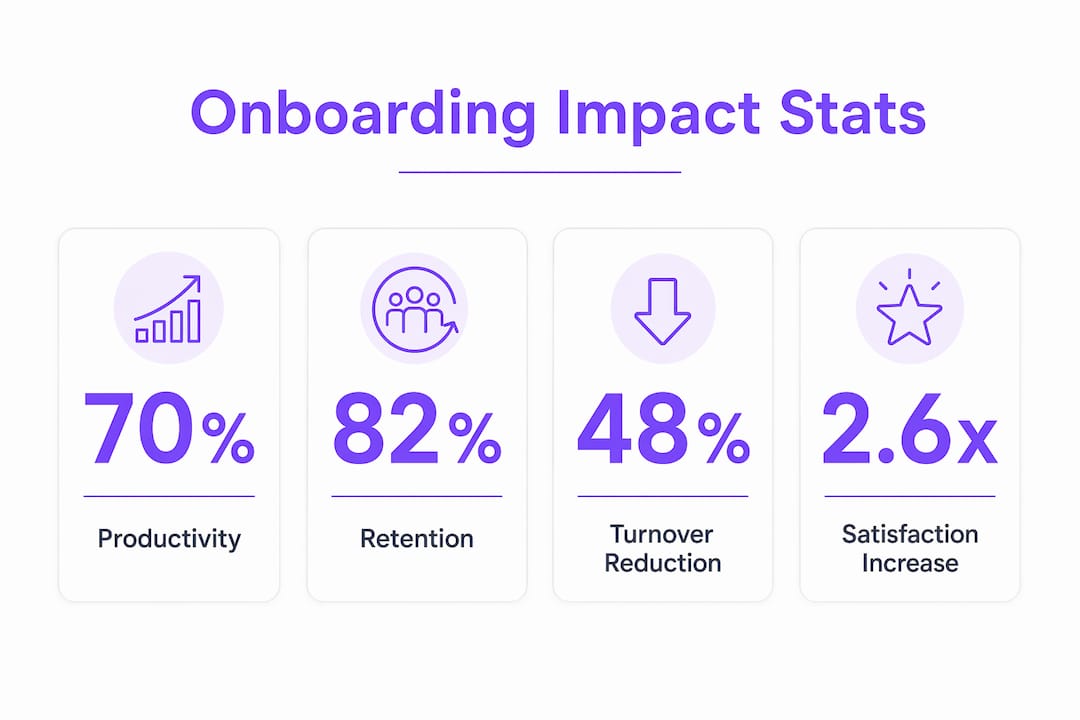
Automated onboarding is the process of using technology to execute new employee integration tasks without manual intervention, and it directly increases satisfaction by eliminating the delays and confusion that make first weeks miserable. Employees who experience exceptional onboarding are 2.6 times more likely to be extremely satisfied with their employer. That single statistic explains why HR teams at companies ranging from mid-size SaaS firms to enterprise operations are replacing spreadsheets and email chains with trigger-based workflow tools. Platforms like Teameasyflow and OnboardSwift have made this shift accessible to teams of any size. This guide explains how automated onboarding improves satisfaction, what the research actually shows, and how to measure whether your process is working.
What are the main benefits of automated onboarding for employee satisfaction?
The core benefit of automated onboarding is time recovery, and that recovered time changes the quality of the new hire experience. HR manual onboarding averages 26 hours per hire. With trigger-based automation, that drops to 2–3 hours. The hours HR saves are not just an efficiency win. They are hours that can be redirected toward meaningful conversations, mentorship, and culture-building that no software can replicate.
Reduced administrative burden
When HR spends less time chasing paperwork and manually assigning system access, new hires spend less time waiting. Waiting is the enemy of early engagement. A new hire who sits idle on day one because their laptop is not configured or their accounts are not provisioned starts forming a negative impression before they have done a single productive task.

Consistent communication and clear expectations
72% of employees want clear role expectations from day one, and 51% want to feel welcomed immediately. Automation delivers both by sending the right message at the right moment, every time, without relying on a manager to remember. A welcome email, a day-one checklist, a week-one check-in: each fires automatically when a trigger condition is met, not when someone finds time to send it.
Faster ramp-up and early productivity
Structured onboarding programs improve productivity by 70%, according to Brandon Hall Group data. Automation enforces structure. It sequences training modules, compliance tasks, and introductions in a logical order so new hires always know what comes next. That clarity accelerates the time to full productivity and reduces the anxiety that slows people down in their first weeks.
Pro Tip: Build your automated onboarding sequence around the new hire’s first 30, 60, and 90 days. Trigger each phase automatically based on completion of the previous one, not on calendar dates. This keeps pace with the individual rather than forcing everyone through the same rigid schedule.
How does automation reduce friction in the new-hire experience?
Operational friction is the gap between what a new hire needs and when they actually get it. Automation closes that gap by removing the human handoffs that create delays. Here are the four friction points that automation addresses most directly.
-
Delayed access to tools and systems. When IT provisioning is tied to a manual request, new hires often wait days for email accounts, software licenses, or building access. Automated workflows trigger provisioning requests the moment an offer is accepted, so everything is ready on day one.
-
Inconsistent task assignments. When managers onboard new hires manually, the process varies by manager, by department, and by how busy that manager happens to be. Automation standardizes the task list so every new hire gets the same quality of experience regardless of who their direct supervisor is.
-
Communication gaps and confusion. New hires who do not know what to do next disengage fast. Trigger-based workflows send instructions, reminders, and resources at precisely the right moment, removing the guesswork that causes anxiety and frustration.
-
Remote and hybrid onboarding failures. One-third of new hires experienced technical issues during remote onboarding. Automated pre-boarding sequences that configure devices, send login credentials, and deliver setup guides before the first day cut those incidents significantly.
The underlying logic is straightforward. Automation primarily prevents uncertainty and delays rather than simply delivering more content. A new hire who knows exactly what to do, has the tools to do it, and receives timely communication feels supported. That feeling of support is what drives satisfaction scores upward.
What does the research say about onboarding and retention?
The data connecting onboarding quality to retention is not subtle. It is decisive.
| Metric | Finding | Source |
|---|---|---|
| Satisfaction multiplier | Exceptional onboarding makes employees 2.6x more likely to be highly satisfied | Gallup, 2026 |
| Retention improvement | Structured onboarding improves retention by 82% | Brandon Hall Group |
| Early turnover risk | 48% of poor-onboarding employees planned to leave within six months | Gallagher, 2026 |
| Cost reduction | Structured onboarding reduces onboarding costs by 60% | FirstHR, 2026 |
The 48% early-turnover figure deserves particular attention. Nearly half of employees who had a poor onboarding experience were already planning their exit within six months. That is not a performance problem or a culture problem. It is a process problem, and process problems are exactly what automation solves.
The 82% retention improvement from structured onboarding is equally striking. Structure does not require a large HR team. It requires a well-designed workflow that fires consistently. Automation makes structure the default rather than the exception. That shift alone explains most of the retention gains organizations see after implementing automated onboarding.
How do you implement automated onboarding that actually works?
Deploying automation without a measurement framework is the most common mistake HR teams make. The technology is only as good as the feedback loop you build around it.
-
Define your KPIs before you launch. Track retention at 30, 60, and 90 days. Measure new hire satisfaction scores at each interval. Measuring onboarding success with these KPIs is the mechanism that turns automation from a one-time setup into a continuously improving system.
-
Use pulse surveys as feedback triggers. Send a short three-question survey at the end of week one and week four. Automate the delivery and the follow-up. If a score drops below a threshold, trigger an alert to the hiring manager so a human conversation can happen before a problem becomes a resignation.
-
Personalize paths while maintaining consistency. Not every role needs the same onboarding sequence. A software engineer and a sales rep have different tool stacks, different training needs, and different success metrics. Build role-specific tracks within your automation platform. Event-driven, personalized onboarding sequences are more effective than generic scheduled communications because they respond to what the new hire has actually completed.
-
Leverage workflow execution tools, not just task trackers. Tools like Teameasyflow execute processes rather than simply listing them. That distinction matters. A task tracker tells someone what to do. A workflow execution platform does it for them, or routes it to the right person automatically.
Pro Tip: Use magic link-based task completion for external collaborators and new hires who have not yet been provisioned with company accounts. Teameasyflow supports this natively, which means a new hire can complete their first onboarding tasks before their work email is even active.
Key takeaways
Automated onboarding improves satisfaction by removing the delays, inconsistencies, and communication gaps that cause new hires to disengage before they ever reach full productivity.
| Point | Details |
|---|---|
| Automation saves significant HR time | Processing time drops from 26 hours to 2–3 hours per hire, freeing HR for human-focused work. |
| Structure drives retention | Structured onboarding improves retention by 82% and productivity by 70%, per Brandon Hall Group. |
| Poor onboarding accelerates exits | 48% of employees with bad onboarding planned to leave within six months, making process quality a retention lever. |
| Measurement sustains gains | Track satisfaction scores and retention at 30, 60, and 90 days to keep your automation improving over time. |
| Personalization increases effectiveness | Role-specific onboarding tracks outperform generic sequences by responding to individual progress and needs. |
Why automation alone will not save your onboarding
I have seen HR teams deploy sophisticated onboarding automation and still end up with dissatisfied new hires. The technology worked perfectly. The problem was that nobody had thought about what happens between the automated touchpoints.
Automation is exceptional at eliminating friction. It is not capable of replacing the moment when a manager sits down with a new hire and says, “Here is what success looks like in this role, and here is how I will support you.” That conversation cannot be triggered by a workflow. It requires a human being who is present and intentional.
The teams that get the most out of automated onboarding use it to free up time for exactly those moments. When HR is not chasing paperwork and managers are not manually assigning system access, they have the bandwidth to focus on connection. The automation handles the logistics. The people handle the relationship.
The other mistake I see regularly is over-engineering the automation itself. Teams build 40-step onboarding workflows with branching logic and conditional triggers, then wonder why new hires feel overwhelmed. Start with the ten most critical tasks. Automate those well. Measure the results. Then expand. Complexity added before you understand what works is just noise.
Continuous measurement is not optional. Onboarding is not a set-and-forget process. The organizations that sustain high satisfaction scores treat their onboarding workflow as a product that gets iterated based on real data. They run pulse surveys, they review 90-day retention numbers, and they update their sequences when the data tells them something is not working.
Technology is a tool. Good leadership is the strategy. The best onboarding programs use both.
— Harsh
Put your onboarding on autopilot with Teameasyflow
If your HR team is still spending hours per hire on manual onboarding tasks, the gap between where you are and where you could be is measurable in both time and satisfaction scores.
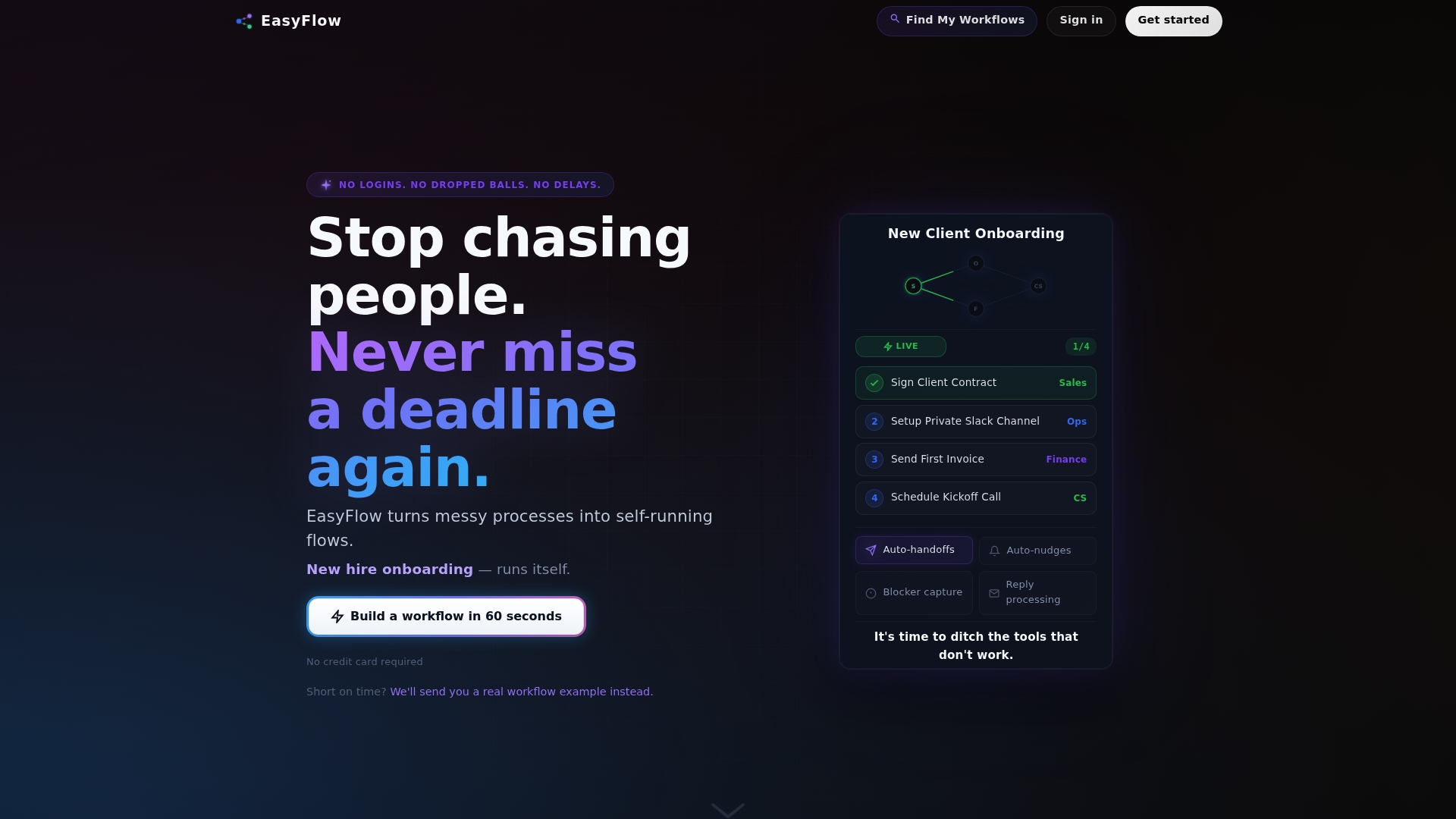
Teameasyflow is free workflow management software built to execute processes, not just track them. Unlike task management tools that require every participant to create an account, Teameasyflow lets new hires complete onboarding tasks through magic links before their company accounts are even active. You can build role-specific onboarding tracks, automate task routing, and track completion in real time without adding headcount to your HR team. For organizations serious about improving onboarding experiences and reducing early turnover, Teameasyflow is the practical starting point.
FAQ
What is automated onboarding?
Automated onboarding is the use of workflow technology to execute new employee integration tasks, such as provisioning system access, sending communications, and assigning training, without manual intervention from HR or managers.
How does automated onboarding improve satisfaction?
Automated onboarding improves satisfaction by eliminating delays, standardizing communication, and giving new hires clear expectations from day one. Employees who experience exceptional onboarding are 2.6 times more likely to report high satisfaction with their employer.
How does onboarding affect employee retention?
Structured onboarding programs improve retention by 82%, according to Brandon Hall Group research. Separately, 48% of employees who had poor onboarding planned to leave within six months, making onboarding quality one of the strongest predictors of early turnover.
What kpis should HR track for onboarding success?
Track retention rates at 30, 60, and 90 days alongside new hire satisfaction scores at each interval. Gallagher’s 2026 research identifies these as the most reliable indicators of whether your onboarding process is delivering results.
Can small HR teams implement automated onboarding effectively?
Yes. Platforms like Teameasyflow are designed for lean teams and reduce per-hire processing time from 26 hours to roughly 2–3 hours. Start with your ten most critical onboarding tasks, automate those, measure the outcomes, and expand from there.